Wednesday, 31 August 2011

distances - How far apart can two people watch the moon simultaneously?

If we take 6371.0 km as the mean radius of Earth, an apogee of Moon of 405503 km, and a perigee of 363295 km, we get ratios of 6371.0 km / 405503 km = 0.01571 = sin 0.9002° resp. 6371.0 km / 363295 km = 0.01754 = sin 1.005°. So on both sides of Earth between $$40030mbox{ km}cdot 0.9002°/360°=100mbox{ km}$$ and $$40030mbox{ km}cdot 1.005°/360° =112mbox{ km},$$ with an average circumference of $2picdot 6371mbox{ km}=40030mbox{ km},~$ get lost of the 20015 km of the half circumference of Earth as zone of visibility.


The calculation is simplified to the simultaneous visibility of a point at the distance of the center of moon. More precisely one part of the moon can be visible from one observer, while an other part of the moon is visible from a second observer. This adds between 29.3 and 34.1 arc minutes or between 54.3 (apogee) and 63.2 km (perigee) to the diameter of the zone of visibility.


The visibility of the Moon is influenced by additional factors like air temperature, height of the observer above sea level or the geographic position by Earth's flattening. But this applies also for the visibility of the sun.


The corresponding calculations for the sun: With aphelion of Earth of 152098232 km and perihelion of 147098290 km, we get ratios of 6371.0 km / 152098232 km = 0.000041887 = sin 0.0024000° resp. 6371.0 km / 147098290 km = 0.000043311 = sin 0.0024815°.
So on both sides of Earth between $$40030mbox{ km}cdot 0.0024000°/360°=0.26686mbox{ km}=266.86mbox{ m}$$
and
$$40030mbox{ km}cdot 0.0024815/360°=0.27780mbox{ km}=277.80mbox{ m}$$
get lost of the 20015 km of the half circumference of Earth as zone of visibility.


(For a rough estimate you may take the 100 km loss of the moon visibility, and multiply it by the quotient of the distances Earth-Moon and Earth-Sun roughly equal to 400,000 km / 150,000,000 km = 0.002667, to get 266.7 m visibility loss of the sun.)


This is again simplified, and applies to the center of the sun. The appearent diameter of the sun varies between 31.6 and 32.7 arc minutes, adding between 58.6 (aphelion) and 60.6 km (perihelion) to the diameter of the zone of visibility for observers looking at different parts of the sun.


Depending on which scenarios to be compared, the lost area varies. As an example, a loss of a radius of the visible zone of the moon in comparison to the sun of 100 km corresponds to a roughly cylindrical area of $$100mbox{ km}cdot picdot 40030mbox{ km}=12.6 mbox{ million square kilometers}.$$


How far can two observers be apart at maximum, to see two differnt parts of the moon at the same time? $$20015 mbox{ km} - 2cdot 100 mbox{ km} + 54.3 mbox{ km} = 19869.3 mbox{ km}$$ (apogee) for the average Earth radius. For the same part of the moon it's $$20015 mbox{ km} - 2cdot 100 mbox{ km} = 19815mbox{ km}.$$

Tuesday, 30 August 2011

exoplanet - What is the most extreme weather found on another planet?

I would say on the gas giants: Jupiter, Saturn, Uranus and Neptune.


Storms on Jupiter, such as the Great Red Spot or Oval BA, are well known.


Storms on Saturn, such as the Dragon Storm or the Great White Spot, are well known.


Storms on Uranus are not common, but there is one: the Uranus Dark Spot.


Storms on Neptune are very common: the former Great Dark Spot, the former Scooter and much more.


Storms on the inner planets also happen:


Storms on Mars are pretty rare, but one type is not, a dust devil.


Storms on Venus are common, cyclones similar to Earth's storms appear.


Storms on Mercury are extremely rare, mostly due to the lack of an atmosphere.


Storms on Earth, you all know.

black hole - Why don't Neutron Stars form event horizon?

Trying to compare density of Black Holes and Neutron Stars I came up with the following:


A typical neutron star has a mass between about 1.4 and 3.2 solar masses1[3] (see Chandrasekhar Limit), with a corresponding radius of about 12 km. (...) Neutron stars have overall densities of 3.7×10^17 to 5.9×10^17 kg/m^3 [1]


and


You can use the Schwarzschild radius to calculate the "density" of the black hole - i.e., the mass divided by the volume enclosed within the Schwarzschild radius. This is roughly equal to (1.8x10^16 g/cm^3) x (Msun / M)^2 (...)


The value of the Schwarzschild radius works out to be about (3x10^5 cm) x (M / Msun) [2]


Let's take a neutron star from the top of the spectrum (3.2 Msun) and same mass black hole.


Converting units:


  • Neutron star: 5.9×10^17 kg/m^3 = 5.9 × 10^14 g/cm^3

  • Black hole: 1.8x10^16 g/cm^3 x (1/5.9)^2 = 5.2 x10^14 g/cm^3

The radius of the black hole would be (3x10^5 cm) x ( 5.2 ) = 15.6km


The 3.2Msun Neutron Star of this density would have volume of 1.08 x 10^13 m^3 which gives radius of 13.7 kilometers


According to Shell Theorem, spherical objects' gravity field strength at given distance is the same for spheres as for point masses so at the same distance from center of same mass (point - black hole, sphere - neutron star) the gravity will be the same.


That would put the surface of the neutron star below the surface of event horizon of equivalent black hole. Yet I never heard about even horizon of neutron stars.


Either I made a mistake in my calculations (and if I did, could you point it out?) or... well, why?

Monday, 29 August 2011

Formation of stars - Astronomy

It all starts in a molecular cloud, which are clouds in space with high densities. They can contain all kind of gases and dust and also due to their densities and relatively low temperatures they also contain molecules like H2, CO2 and H2O. These are in a thermodynamic equilibrium until something disturbs them (usually nearby supernovae). For some reason a zone of this cloud becomes more dense and gravity wins to and starts to collapse the could until it forms a star.


Theses molecular clouds can be the remains of dead stars or simply a bunch of gas and dust collected and hold at the high density zones at the galaxies spiral arms or arround the core.

light - By putting a mirror in space, would we be able to see into the past?

Here are some thoughts adapted to an answer I placed on Phyiscs SE to a similar question some time ago. In order to observe the past we need to detect light from the Earth, reflected back to us from somewhere distant in space.


The average albedo of the Earth is about 0.3 (i.e. it reflects 30 percent of the light incident upon it). The amount of incident radiation from the Sun at any moment is the solar constant ($F sim 1.3 times 10^3$ Wm$^{-2}$) integrated over a hemisphere. Thus the total reflected light from the Earth is about $L=5times 10^{16}$ W.


If this light from the Earth has the same spectrum as sunlight and it gets reflected from something which is positioned optimally - i.e. it sees the full illuminated hemisphere. then, roughly speaking, the incident flux on a reflecting body will be $L/2pi d^2$ (because it is scattered roughly into a hemisphere of the sky).


Now we have to explore some divergent scenarios.


  1. There just happens to be a large object at a distance that is highly reflective. I'll use 1000 light years away as an example, which would allow us to see 2000 years into the Earth's past.

Let's be generous and say it is a perfect reflector, but we can't assume specular reflection. Instead let's assume the reflected light is also scattered isotropically into a $2pi$ solid angle. Thus the radiation we get back will be
$$ f = frac{L}{2pi d^2} frac{pi r^2}{2pi d^2} = frac{L r^2}{4pi d^4},$$
where $r$ is the radius of the thing doing the reflecting.


To turn a flux into an astronomical magnitude we note that the Sun has a visual magnitude of $-26.74$. The apparent magnitude of the reflected light will be given by
$$ m = 2.5log_{10} left(frac{F}{f}right) -26.74 = 2.5 log_{10} left(frac{4F pi d^4}{L r^2}right) -26.74 $$


So let's put in some numbers. Assume $r=R_{odot}$ (i.e. a reflector as big as the Sun) and let $d$ be 1000 light years. From this I calculate $m=85$.


To put this in context, the Hubble space telescope ultra deep field has a magnitude limit of around $m=30$ (http://arxiv.org/abs/1305.1931 ) and each 5 magnitudes on top of that corresponds to a factor of 100 decrease in brightness. So $m=85$ is about 22 orders of magnitude fainter than detectable by HST. What's worse, the reflector also scatters all the light from the rest of the universe, so picking out the signal from the earth will be utterly futile.


  1. A big, flat mirror 1000 light years away.

How did it get there? Let's leave that aside. In this case we would just be looking at an image of the Earth as if it were 2000 light years away (assuming everything gets reflected). The flux received back at Earth in this case:
$$ f = frac{L}{2pi [2d]^2} $$
with $d=1000$ light years, which will result in an apparent magnitude at the earth of
$m=37$.


OK, this is more promising, but still 7 magnitudes below detection with the HST and perhaps 5 magnitudes fainter than might be detected with the James Webb Space Telescope if and when it does an ultra-deep field. It is unclear whether the sky will be actually full of optical sources at this level of faintness and so even higher spatial resolution than HST/JWST might be required to pick it out even if we had the sensitivity.


  1. Just send a telescope to 1000 light years, observe the Earth, analyse the data and send the signal back to Earth.

Of course this doesn't help you see into the past because we would have to send the telescope there. But it could help those in the future see into their past.


Assuming this is technically feasible, the Earth will have a maximum brightness corresponding to $m sim 35$ so something a lot better than JWST would be required and that ignores the problem of the brightness contrast with the Sun, which would be separated by only 0.03 arcseconds from the Earth at that distance.


Note also that these calculations are merely to detect the light from the whole Earth. To extract anything meaningful would mean collecting a spectrum at the very least! And all this is for only 2000 years into the past.

Sunday, 28 August 2011

orbit - What is exactly the "longitude of the perigee"

Perigee is the Earth-specific name for periapsis. People use longitude (which is a composite angle rather than an angle) because this solves the problems of circular and equatorial orbits.


The reason you need to use an epoch time to specify the Moon's argument of perigee and longitude of ascending node is because the Moon's orbit about the Earth precesses. Neither the argument of perigee nor the longitude of ascending node is constant. Instead, they are functions of time (and hence, so is longitude of perigee).


In the case of an inclined, non-circular orbit, "longitude" is the sum of the right ascension of the ascending node (which is measured on the fundamental plane of the reference system) and some angle (or angle-like measure such as mean anomaly) on the orbital plane. Thus longitude of periapsis (or longitude of perigee in the case of an object orbiting the Earth) is the sum of the object's right ascension of ascending node and it's argument of periapsis.


The use of "longitude" as orbital elements are for two reasons: To be able take advantage of Hamiltonian mechanics (this was done by Delaunay, resulting in the Delaunay orbital elements), and to address problems related to orbits with very small inclinations and/or very small eccentricities (this was done by Poincaré, resulting in the Poincaré orbital elements). Anomaly and longitude are synonymous in the case of an orbit with zero inclination.


While it is invalid to add two angles on different planes and treat the sum as if it were an angle, it is not necessarily invalid to treat that sum as what it is, a composite angle or dogleg angle, which is exactly what the Poincaré orbital elements do. ("Dogleg angles" aren't angles. Analogous terms include "dwarf planets", which aren't planets, and "red herrings", which oftentimes are neither red nor herrings.)

Saturday, 27 August 2011

Why is the interstellar medium so hot?

What that ESA (European Space Agency) page titled Hot gas sloshing in a galactic cauldron that you link to describes are called WHIM (Warm–Hot Intergalactic Medium). They are not interstellar medium, but intergalactic medium gas. The difference in density is huge, with interstellar medium density at an average of $rho ∼ 1 ppcm$ (one proton per cubic centimeter), but the density of these WHIM being even a few orders of magnitude lower at $rho ∼ 10^{−6}−10^{−5} ppcm$, or roughly 1 to 10 protons per cubic meter (NASA's Chandra X-ray Observatory quotes average density of 6 protons per cubic meter).


What is interesting about WHIM is that they are absolutely huge. We're talking of distances that extend across clusters of galaxies (so stretching multiple millions of light years), which means that even as tenuous as they are, account for a large portion of the baryonic matter of the Universe:


Such matter is predicted to account for a sizable fraction ($∼ 50%$)
of all the baryons in the local        ($z < 1$ [redshift in the infrared
spectrum]
) Universe, and it is thus considered the best candidate to
host the baryons seen at high redshift and missing from the low
redshift census.


So now about their heat emissions, and why are they detected in the X-ray range in the first place (the ESA's article mentions the photograph featured there was taken by the ESA’s XMM-Newton X-ray observatory):


Electrons and baryons in the WHIM are shock-heated during their infall
in the dark matter LSS [Large–Scale Structures] potential well, and settle in
filamentary/sheet-like structures surrounding LSSs.


I've added a few clarifications in quotes encapsulated in square brackets, but what this means is that parts of these WHIM interact with AGN (Active Galactic Nucleus) as the galaxies pass by, and the X-ray emissions of AGN excite Baryonic matter to a temperature $T ∼ 10^5−10^7 K$.


Quote sources:


Additional reading:

formation - How did the moon's orbit become eccentric?

First, your claim that the moon is more eccentric isn't entirely true (lets ignore Pluto):


(Source)


Mercury .205
Mars .094
Saturn .057
Moon .055
Jupiter .049
Uranus .046
Earth .017
Neptune .011
Venus .007


So, it's really not abnormal, though it might be unusually eccentric for a non captured moon, but that's may be due to it being as close to the sun as it is.


Also, our solar system might not be exactly normal. It's fairly common for solar systems to have a gas giant close to the sun (explained here). And there are some very odd solar systems - same link.

orbit - Is axial tilt direction correlated with semi-major axis direction?

It's mere coincidence. In about 10,000 years, perihelion will coincide with the northern hemisphere summer solstice.


There are two precessions of interest here. One is the 26,000 year period axial precession of the Earth's rotation axis, caused mostly by the Moon and the Sun; the other is the 112,000 year period apsidal precession of the Earth's orbit, caused mostly by Jupiter and Venus (but also with a pinch of help from general relativity). This result in three different concepts of a year:


  • The sidereal year is the mean time it takes the Earth to make a complete orbit with respect to inertial space ("the fixed stars").


  • The tropical year (aka solar year) is the mean time it takes for the Sun's ecliptic longitude to increase by 360 degrees, and also the time between one vernal equinox to the next. This is the year used as the basis of our calendar. This year is shorter than the sidereal year by about 20 minutes and 25 seconds.


  • The anomalistic year is the mean time between one perihelion passage of the Earth to the next. This year is longer than the sidereal year by about 4 minutes and 43 seconds, and hence longer than the tropical year by about 25 minutes and 8 seconds.


That 25+ minute difference between the anomalistic and tropical years means that time of perihelion passage advances by about a day every 57 years.

the sun - What are some theories that explain the 11 year solar cycle?

It is linked to the solar dynamo and the dynamical behavior of the so-called $alpha$-effect. One way to understand easily the solar dynamo and the the $alpha$-effect with the hand is the following: you can generate a magnetic field by differential rotation (the $Omega$-effect, $Omega$ being the classical notation for the angular velocity). But this sole effect, twisting the magnetic field, would fold it so much that it will reconnect and dissipate. If you don't want to lose the magnetic field, you need a process to "regenerate" it, and a good way to do it is to create a poloidal component of the magnetic field. This poloidal component can be generated by convection in the solar interior; the magnetic field is, in the same time, twisted and pulled and that explains the solar dynamo.


Now, you can show that dynamo waves will propagate from the equator to the poles, and when the poles are reached, a reversal is observed. This propagation of dynamo waves is well observed by the sunspots patterns during the solar cycle.


Sources:

Thursday, 25 August 2011

star - Mechanism for Brown Dwarf Fusion

I've read (at here, among other places) that during the Degenerate Era, star formation will end and the last stars will go out. But it was noted that there is still the possibility of star birth, coming from the collision of two stellar remnants, such as brown dwarfs (although white dwarfs also have the potential for such a collision). When two brown dwarfs collide, if they have enough combined mass, fusion can begin.


This is much different from how normal stars form today, and how they fuse hydrogen and other elements. So my question is this:


Will there be any major differences between the fusion process in the new "star" and a star with the same mass that formed via traditional star formation (i.e. collapse of a gas cloud)? Also, how will this affect the new "star's" life cycle?

Monday, 22 August 2011

space time - How would Special relativity explain past-present-future if thinking about 13-billion-light-years distanced objects

First off, if Earth were point B, and you were an observer at point A looking at it with the most magnificent telescope ever imagined, you would still not see the Earth, because it didn't exist 13 billion years ago. I assume you picked 13 billion years because it is roughly the age of the universe, so you'd see the universe as it existed then, but that doesn't get you what I think you want. I will instead pick 4.5 billion years ago (or objects A and B 4.5 billion light years apart), because then you will have an actual Sun and Earth to look at but long before life evolved.


We'll also wave our arms over the tracking software of your telescope being able to locate Sun and Earth in their orbits over the course of 4.5 billion years as seen from point B.


  1. Yes. You would have to wait 4.5 billion years to see the observer at point A looking back at you through his telescope. You would now be looking at a cooling hunk of molten rock with no moon or oceans.


  2. No. If you waited 4.5 billion years and saw Observer A, he would have been dead for 4.5 billion years by the time you see him. In fact, his Sun would likely be expanding to the point of burning his planet to a cinder if not engulfing it entirely. But of course, you would have to wait another 4.5 billion years to see that. You would be observing the photons that bounced off Observer A all that time ago and have been traveling ever since. It is important to note that this is not him, and does not mean he still exists.


Hopefully this answers your question, though it doesn't have much to do with Special Relativity, it's still good blow-your-mind stuff. It's just speed of light stuff which we really knew and measured (albeit inaccurately) long before Einstein.

the moon - Calculate Atmospheric Extinction Using Source Altitude Angle

You seem to be referring to the computation of $m$ in equation (15) for the extinction as the light from the source passes through the atmosphere. The author intends to say that $mapprox frac{1}{sin(alpha_s)}$, where $alpha_s$ is the altitude of the source (in radian), so restricted to the range $0$ to $ pi/2$. (Note this is not the inverse of the sine function as the author says but the reciprocal of the sine function) The altitude is the angle measured from the horizon to the source, which is $=pi/2-theta$ where $theta$ is as in figure 2. Note this blows up when $alpha_s=0$ ($theta=pi/2$) because in the simple approximation being used the path length through the atmosphere in infinite.


The approximation being used here is that of a flat Earth, and $m$ is the number of equivalent atmosphere heights that the light path travellels through

Saturday, 20 August 2011

orbit - Is there a ceiling for stable L4 or L5 masses?

Note: Answering from a comment posted on Space Exploration


The classical stability analysis of these libration points assumes that we are examining the motion of a particle whose dynamics are perturbed by the gravitational impacts of a primary and secondary mass, so as a bottom-line-up-front type of answer, the mass of T is negligible - so any large increases in mass will negate these assumptions. Further, the stability analysis is linear stability analysis, implying that the stability is only valid within a neighborhood of the equilibrium point, and very little information can be said about the non-linear behavior (However, an unstable equilibrium point will be unstable in the non-linear dynamics).


With that said, the critical mass value in the circular restricted three body problem (CR3BP) can be found from the following development, summarized from most major astrodynamics texts to include Vallado (1), Roy (2), Schaub (3), or the essential 1967 CR3BP text by Szebehely (4). The linear variational equations of motion for small in-plane perturbations about the triangular libration points can be found as


$ddot{xi}=2dot{eta}+U_{xx}^*xi + U_{xy}^{*}eta\
ddot{eta}=-2dot{xi}+U_{yx}^{*}xi+U^{*}_{yy}eta$


where $xi,eta$ are the perturbations in the $x$ and $y$ directions in the CR3BP synodic frame, and $U^{*}_{..}$ is are partials of an artificial pseudo-potential function. Essentially, the characteristic equation for this linear system is found as $Lambda^2 + Lambda + frac{27}{4}mu(1-mu)=0$, where $Lambda = lambda^2$, $lambda$ being an eigenvalue of the actual characteristic equation.


If we let $g = 1-27mu(1-mu)$, the four roots of the system can be expressed as slightly complicated functions of $g$, but the eigenvalue behavior can be classified according to the value of $g$ as below:


  • $0 < g leq 1$: Pure imaginary eigenvalues, marginal stability

  • $g = 0$: Repeated eigenvalues; secular terms present; unstable

  • $g > 0$: Eigenvalues with positive reals; unstable

The critical $mu$ value ($mu_c$) comes from setting $g=0$. Solving this, we find that $mu_c=frac{1}{2}left(1pmfrac{sqrt{69}}{9}right)approx0.0385$. Again, a key assumption in this development is that the mass of the third body is negligible. A lot of systems of interest are below this critical mass value to include the Earth-Moon, Sun-Earth, Sun-Jupiter, etc.; however, some systems are definitely above this value -- consider the Pluto-Charon system with a $mu$ value of approximately 0.1101.


1: Vallado, D.A. Fundamentals of Astrodynamics and Applications. 30 Jun, 2001. Springer Science & Business Media.


2: Roy, A.E. Orbital Motion, 4th Ed. 31 Dec 2004. CRC Press.


3: Schaub, H.P. Analytical Mechanics of Space Systems. 2003. AIAA.


4: Szebehely, V.G. Theory of Orbits in the Restricted Problem of Three Bodies. June 1967. Academic Pr.

tidal forces - Help in determining the features of an unusual, fictional star system

First it will be important to consider the term 'relativistic speed'. If by that you mean something like 0.1c, it will only change the colour of the stars as you mentioned in the bounty description. However, if it means something with higher Lorentz Gammas (like 0.9c or 0.99c), all other relativistic effects come into play. There's relativistic beaming and aberration combined, which means that all the light that you receive from systems with respect to which you're moving at relativistic speeds will only be received in small beams towards the direction you're moving in and those will be strongly blueshifted and intensified. Watch this animated video for an illustrated view of what I mean - https://www.youtube.com/watch?v=JQnHTKZBTI4. (It's not a high quality video, but it is very effective in demonstrating what I just wrote.)


So, in effect, you will possibly see only three major sources of light in the sky:


  1. The parent planet

  2. The parent star

  3. The bright patch of the sky in the direction of motion, highly blueshifted, with brightness dependent on your speed

Their relative brightnesses will depend on:


  1. distance to parent star

  2. distance to parent planet

  3. albedo of the parent planet

  4. speed of motion through the ism

For a day and night cycle:


  • The parent planet will obviously be at the zenith the whole time (or fixed location in the sky if you're at a different location).

  • The parent star will appear to move around the sky with the same period as the revolution period of the moon - say a few days at the most (will be fairly small as compared to the 12 year revolution period of the planet, so you can ignore 'synodic' effects to the first order for a single day/night cycle).

  • The sky will also move with roughly the same period as the sun, ignoring synodic effects.

Winds will be very complexly affected by the three sources (since heating due to radiation affects winds). There will also be tidal effects due to the parent planet which also play a role in the winds (similar to how tides work on the earth). So, you will have to take into account heating from the star, heating from the planet (which is constant due to tidal locking), tidal effects of the planet (again constant) and heating from the sky. Now the radiation from the sky can also act in a weird way, since blueshifting can give rise to strong emissions in UV, X-ray and Gamma ray photons, plus relativistic cosmic rays (everything you encounter will be in the form of cosmic rays due to the relativistic speed of your motion). These can ionize the atmosphere, heat it, cause there to be particle showers and aurorae, which can all affect wind patterns in complex ways, which I cannot exactly say much about, given my limited knowledge in atmospheric sciences.


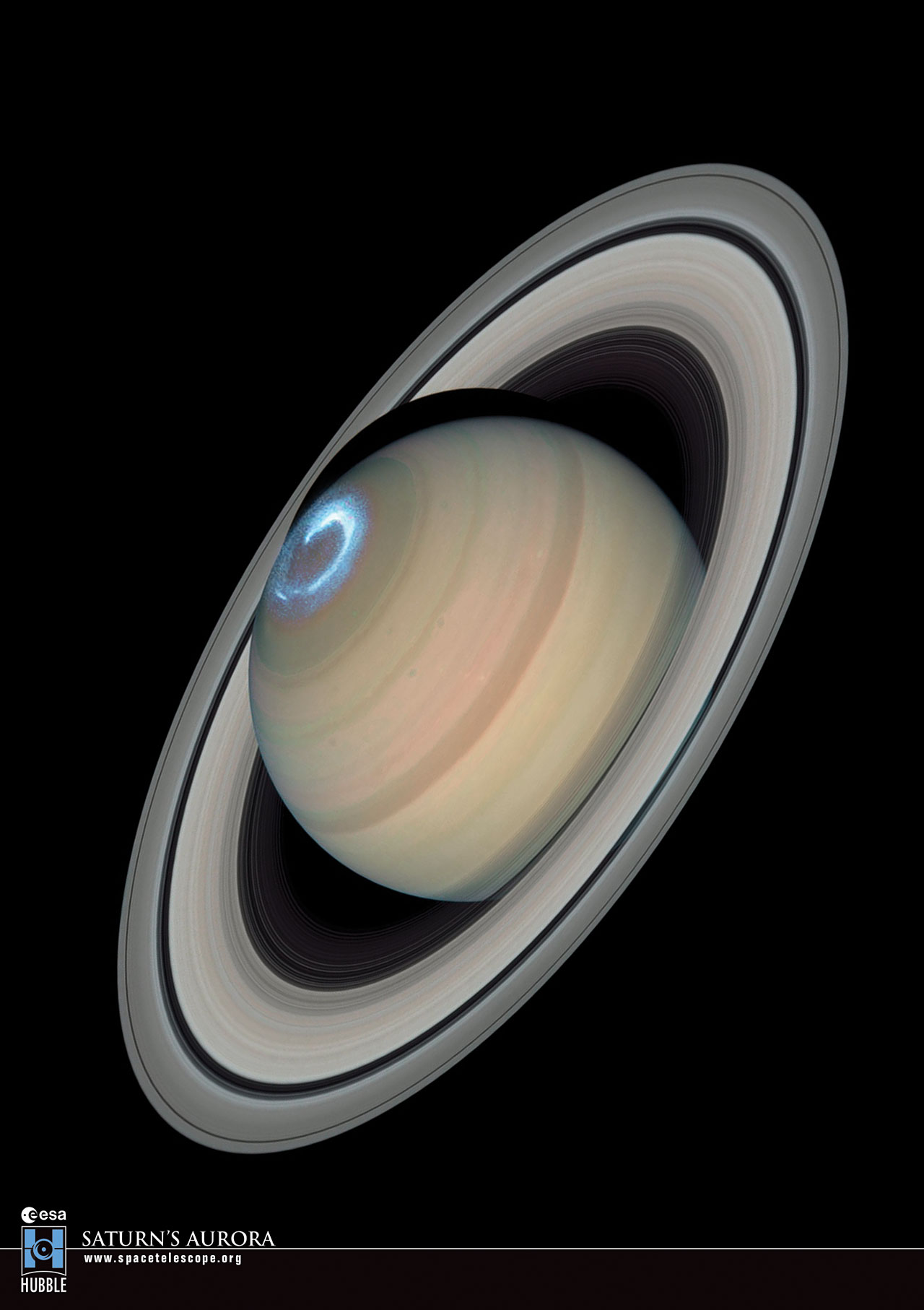
As I mentioned above, yes, all interactions will be relativistic and will be similar to cosmic ray bombardment onto the moon you live on. Things will get nasty and you'll be having geomagnetic storms all the time. Satellite communications will probably never work. Expect these particles to arrive in the previously mentioned bright region of the sky due to aberration still applying to this case. You will see similar aurora like regions on the parent planet (http://www.spacetelescope.org/static/archives/postcards/screen/hst_postcard_0008.jpg), and the star will probably not be affected that much.


Oh and by the way, due to the antimatter nature of your system and the matter nature of the ism, the atmosphere would thin over time, and later these antimatter cosmic rays will start bombarding the moon. So if you stay in the ism for long enough, living on the moon will be difficult. Also, I am assuming that life evolved on your moon in an antimatter ISM and you have entered the matter ism only recently, as otherwise, the moon won't be stable for long enough for life (intelligent life) to evolve.


I will try to see if I can think of some other effects, but for now, I guess this will do?!

Friday, 19 August 2011

lunar eclipse - Can we know where (South, East, West...) the moon will be at a specific time?

A planetarium programme will tell you exactly where to look, and can be invaluable when looking for the location of planets, but the Moon is very easy to find in the sky, even after several glasses of Flanders Red Ale.


So what you really want to know is a) is the eclipse visible from Belgium and b) roughly where in the sky will the moon be.


This map shows that the Eclipse will be fully visible from Belgium. So that's good.


The the Moon will be full (a lunar eclipse always happens at full moon) so the moon will rise in the East as the sun sets, and travel into the West. At Midnight (12 AM, but many people make that mistake) the Moon will be in the South, and at 4AM it will be South West, and quite low in the sky. But even eclipsed the moon hard to miss!


Don't go out too early. Nothing much will be visible until the "Umbral eclipse" starts at 1:07 UTC (=3:07 am in Belgium)


I wish you clear skies.

Thursday, 18 August 2011

near earth object - What is the ratio of "real" stars in the sky?

It's almost 100% stars.


In good conditions, you can see perhaps 2000 stars. (There are about 6000 naked-eye visible stars; of these, 3000 are above the horizon at any time, and about 1000 are hidden because they're too close to the horizon and blocked by the atmosphere.)


The number of non-star objects you can see without assistance is tiny in comparison:


  • The Sun (obviously not at night, and of course it's a star)

  • The Moon

  • The International Space Station, but only a tiny fraction of the time

  • The visible planets: Mercury, Venus, Mars, Jupiter, Saturn (and maybe Uranus if you have excellent conditions and better eyes than mine)

A handful of other artificial satellites might be visible, but only rarely. Comets can be very visible, but again that's rare. Visible asteroids are even rarer. Vesta, a large asteroid, may be barely visible, but I've never seen it.


Note that some of these objects are quite obviously not distant stars just based on their appearance.


Some galaxies (Andromeda, and the two Magellanic Clouds if you're far enough south) are visible, but they don't look like stars. A few of the brighter nebulas and globular clusters might be visible; the latter are groupings of stars, so I don't know how they'd count.


Meteors and aircraft can be visible, but they're within the atmosphere, and probably not covered by your question.

Wednesday, 17 August 2011

rotation - If the earth stopped rotating, would we really fly inertially at 1000mph?

Depends on how the angular momentum (that manifests itself as Earth's rotation) would be absorbed. If, magically, it's absorbed smoothly and evenly, then not much dramatic happens initially (a small change in your weight and some earthquakes as response to the missing centrifugal forces), but the Earth climate and weather would change dramatically within about 100 hours (mind you that the day==year), the day side heating and drying up and the night side freezing.


If, on the other hand, the angular momentum is absorbed only at certain points, for example if some cosmic giant stops rotation with its finger, then all other structures would need to decelerate from the rotation, likely destroying most human constructions, causing massive flooding of the continents, crumbling of mountains, huge earthquakes, instant death to most non-microbic life forms.

Monday, 15 August 2011

How can satellites be safe in the atmosphere when there are so many asteroids coming in?

Space debris is a big problem for space industry. Natural bodies like dust or asteroids are not the main challenge, although probes are frequently hit by fine dust. The dust causes tiny craters on the surface of the probes or can change rotation or orbit slightly. This can mostly be corrected, e.g. by wheels fueled from solar panels.


The most concerning objects are remnants of human-made objects circling around the earth. With each collition of two such objects clouds of fragments form, leading to ever more collitions. Those fragments are tracked by radar, and probes try to avoid collitions by adjusting their orbits. But sometimes they are hit and destroyed.


An orbit is the path along which a satellite travels around e.g. Earth.


A satellite must remain outside the lower parts of the atmosphere, otherwise it will be slowed down and fall to the ground. The lower limit is somewhere near 200 km above ground. A satellite travels with about 8 kilometers per second around Earth, when in a lower Earth orbit.


Many satellites are in the geo-stationary orbit, about 36,000 km above ground. There Earth's atmosphere is neglectably thin, only some minor magnetic field can be found there; that part of the atmosphere is called magnetosphere.


The further away a satellite orbits the Earth the slower it travels to compensate Earth's gravity, because Earth's gravity grows weaker with distance from the Earth.


At present the probability of collisions, which destroy satellites, is very low for a single satellite. Actually there are only a few documented cases: "only one major incident has occurred: the 2009 satellite collision between Iridium 33 and Cosmos 2251", of the above wikipedia article. And "China was widely condemned after their 2007 anti-satellite missile test, both for the military implications as well as the huge amount of debris it created" of the same Wikipedia article.


The central problem is the growing number of fragments to be expected for the future, as a consequence of more satellites in the orbit, and the expected chain reaction of fragmentation.


Details of surface degradation of satellites due to impacts of dust particles can be read e.g. here. Most of that dust ist human-made. Surface degradation has consequences, e.g. for solar panels.


See also a related question at StackExchange.


Regarding the second part of the question:
The dust particles collide with the satellites and evaporate from the impact heat. So the annihilation distance is more or less zero.


When entering the earth's atmosphere "they usually disintegrate at altitudes of 50 to 95 km " (Meteorid). That's at least 100 km below the lowest satellite orbits.

Sunday, 14 August 2011

oceanography - Why is there a daily inequality for low tides?

The water for high tides needs to come from somewhere; the mean sea level should stay approximately constant, as long as wind is neglected. That way tides are a kind of oscillations.


In the first of the two diagrams a low low tide is followed by a high high tide, and a high low tide is followed by a low high tide. That way the mean sea level, averaged over one low tide - high tide period remains constant:


enter image description here


In the second diagram you need to average over two low tide - high tide periods to get a constant mean:


enter image description here


The first diagram can be explained by the superposition of semi-diurnal tides, while
the second diagram needs an additional diurnal constituent. Depending on the amplitude and phase shift of the diurnal constituent relative to the semi-diurnal constituent we can get different resulting oscillations.


More about tides and their constituents.

Why is a meteorite impact on the moon visible as white light?

The velocity of the impactor of tens of kilometers per second provides enough energy to heat the impactor and parts of the target to several thousands of Kelvins, so that parts are converted to plasma or to vapor, at least.


According to Planck's law the color at these temperatures is white or bluish.


According to the Stefan Boltzman law the total emitted energy is proportional to the forth power of the absolute temperature. Hence material which isn't heated to thousands of degrees, and may glow yellowish or reddish is too dim to be noticible in comparison.


Since most of the heated ejecta are finely distributed, they cool down rapidly by the emitted radiation, and also after contact with the surface.


After cooling there will certainly be some fine dust, which still has to fall back to Moon's surface, but you won't see this on a video from a distance, since it's cooled down and distributed over a wider area.

Thursday, 11 August 2011

earth - Why is every year the same number of days despite the gravity in the solar system?

I was just watching a Geoff Marcy talk on YouTube showing how they infer the presence of planets transiting distant stars. The supposed periodicity wasn't always quite regular from what I could see, and so I wondered if there might be something tugging at the planets as they orbit their star. Then I thought of the earth: Surely there are some years when we are aligned with Jupiter so much so that it would exert some sort of perceptible influence on the planet, thus lengthening the year, even if only by some hours or days, considering that the sun is much more massive. And what would happen every few thousand (?) million (?) years when all the planets and even some of the larger asteroids, Kuiper Belt Objects - everything but the kitchen sink - come into alignment? Wouldn't the earth be drawn outwards to some extent, thus making a year perhaps 370 days long (or whatever)? And maybe temperatures would drop with the planet a fraction of an AU farther from the sun? I know that this is a website for the already enlightened, but I would appreciate an answer that even Josephine Bloggs would understand.

Wednesday, 10 August 2011

black hole - Internet Resource which register all Ultra-long Gamma-Ray Bursts

I guess one of them you're referring to was GRB 130427A (not in December of 2010 or 2011 tho, but in April 2013)? But yes, there are several such catalogs, as are different designators and phenomenological classification methods for these gamma-ray bursts (GBR). For example, GRB 130427A is a simple nomenclature that consists of a date of discovery (130427 denotes 27th of April, 2013 and suffix A is just the first letter from the alphabet, increased when there's more than a single such event in a day), but it doesn't indicate e.g. its type or origin. The same GRB event is so cataloged under designator CSS130502:113233+274156 in the Catalina Real-time Transient Survey catalog, SDSS J113232.84+274155.4 in Sloan Digital Sky Survey catalog, and so on.


So, as you can see, it would help if you could clarify which designators you saw, so we can identify the catalog easier. But not wanting to leave you empty-handed, one such catalog that is frequently used and is relatively easily searchable is the Goddard Space Flight Center's GRBCAT (Gamma Ray Burst CATalog) (on top of those already mentioned).


Post update to the question, I've managed to identify SWIFT pages for the two GRB events in question:


Catalog numbers, references and data are available on linked pages. And here is a complete SWIFT GRB catalog (note, it's rather long, listing all GRB in a single page).

black hole - Has Hawking Radiation Ever Been Observed?

According to this MIT Technology Review "First Observation of Hawking Radiation" and an associated article "Hawking radiation from ultrashort laser pulse filaments" where the authors have simulated Hawking radiation in the laboratory, using ultrashort laser pulse filaments.


So, in part answer to your question, yes Hawking Radiation is believed to have been observed, but in a laboratory environment.


According to "Observing Hawking radiation in Bose-Einstein condensates
via correlation measurements"
(Fabbri, 2012), direct observation of the Hawking radiation is (in their word): hopeless.


However, once again simulations are possible:


Hawking effect, which depends only on kinematical properties of wave propagation
in the presence of horizons, is present also in nongravitational contexts,
for instance in stationary fluids undergoing supersonic flow.


From these articles, it would seem that direct observations of Hawking radiation is not feasible currently; however, we are able to produce analogues of the phenomena in the laboratory.

Tuesday, 9 August 2011

Conundrum involving distance to object, universal expansion, age of universe, etc

The 13 billion lightyears distance of the quasar mean 13 billion lightyears light-travel distance. In other words, the light took 13 billion years to reach us, independent of the distance the quasar is now away from us.


The current proper distance (a chain of rulers would measure) is called comoving distance; it is much larger than the light-travel distance for large redshifts.


The quasar is moving away from us in an accelerated fashion, and is now moving away faster than light. This means, light which is emitted now (in the sense of cosmic time) by the galaxy, the quasar may have evolved into in the meanwhile, will never reach us.
The light, the quasar emitted 13 billion years ago, left the quasar just in time to leave the regions of the universe which later have been receding faster than light from us, to eventually reach us.


As a thought experiment, imagine walking with 5 km/h (our playground speed of light) on a rubber band which is expanding with a constant rate of 1 km/h per meter actual length of the band. (This leads to an exponential acceleration of the distance between the two marks on the band). If you start closer than 5 meters away from your goal, e.g. from a start mark (our quasar) 4.50 m away, you'll finally reach the goal mark. The start mark will soon be further away from the goal mark than 5 meters, therefore receding with more than 5 km/h from the goal shortly after you left the start mark.
At the moment you arrive at the goal mark, the start mark will be much further away (comoving distance) than the distance you needed to walk (light travel distance). And you've been walking a longer distance than the (proper) distance between the marks was at the time you started walking.


Btw.: Acceleration is only felt as a force, when the velocity to the local rubber band (mataphoric space-time) is changed.


Example calculations with a protogalaxy of redshift $z=11.9$:
Based on the Cosmology Calculator on this website, the cosmological parameters $H_0 = 67.11$ km/s/Mpc,
$Omega_{Lambda} = 0.6825$ provided by the Planck project, and the scale factor $d(t) = d_0 / (1+z)$, setting $Omega_M = 1- Omega_{Lambda} = 0.3175$, the
age of the universe is $13.820$ Gyr, and the comoving distance of the protogalaxy is $d_0 = 32.644$ Gly.


The age of the universe, we see the protogalaxy (at redshift 11.9), was 0.370 Gyr, light-travel distance has been 13.450 Gly, proper distance was 2.531 Gly.


After the protogalaxy has been emitting light 0.370 Gyr after the big bang, the light travelled towards us through space of redshift beginning with 11.9 shrinking to 0; the light arrived at us 13.820 Gyr after the big bang. The comoving distance (to us) of the space traversed by the light started with 32.644 Gly shrinking to 0. The remaining distance, the light needed to travel, started with 13.450 Gly shrinking to 0. The proper distance between the protogalaxy and us started with 2.531 Gly increasing to 32.644 Gly due to the expansion of spacetime.


Here some intermediate states described by
a couple of tuples, consisting of


  • redshift $z$,

  • according age $t$ of the universe (Gyr),

  • comoving radial distance (at age $t$) of the emitted light, we can now detect from the protogalaxy (Gly),

  • remaining light travel distance of that emitted light (Gly),

  • proper distance of the protogalaxy at age $t$, according to $d(t) = d_0 / (1+z)$:

$$(11.9, 0.370, 32.644, 13.450, 2.531),$$
$$(11.0, 0.413, 32.115, 13.407, 2.720),$$
$$(10.0, 0.470, 31.453, 13.349, 2.968),$$
$$( 9.0, 0.543, 30.693, 13.277, 3.264),$$
$$( 8.0, 0.636, 29.811, 13.184, 3.627),$$
$$( 7.0, 0.759, 28.769, 13.061, 4.081),$$
$$( 6.0, 0.927, 27.511, 12.892, 4.663),$$
$$( 5.0, 1.168, 25.952, 12.651, 5.441),$$
$$( 4.0, 1.534, 23.952, 12.285, 6.529),$$
$$( 3.0, 2.139, 21.257, 11.680, 8.161),$$
$$( 2.0, 3.271, 17.362, 10.549, 10.881),$$
$$( 1.0, 5.845, 11.124, 7.974, 16.322),$$
$$( 0.0, 13.820, 0.0 , 0.0 , 32.644).$$


The Hubble parameter, meaning the expansion rate of space per fixed proper distance, is decreasing with time. This allowed the protogalaxy to recede almost with the speed of light, although it was just about 2.5 Gly away from us (proper distance) in the time, when it emitted the light we detect now.
Nevertheless distant objects in this space accelerate away from us, since their increasing distance is multiplied with the expansion rate of space.

Monday, 8 August 2011

big bang theory - Why can we still see 10 billion year old galaxies?

We can't see how those galaxies look right now. If a galaxy appears to be 10 billion light years away, that also means that the light took 10 billion years to reach us. It's a bit confusing that "distance" and "time" are sometimes the same thing in astronomy.


So the light which the galaxies emit today (if they still exist) will reach us in another 10 billion years. What we see right now is light that was emitted 10 billion years in the past.


This also means that by looking at the farthest possible distance, we can see light which was created shortly after the big bang. One such source of light is the ubiquitous background radiation which was probably created by the big bang itself. It's easy to see because it fills all the gaps between the celestial objects.


Unfortunately, this also means that we always get an "outdated" view of the universe. If aliens started to blowing stars at the far side of our galaxy, it would take us 100'000 years to see the light.

Saturday, 6 August 2011

gravity - If the moon still had a magnetic field how long would have been possible to keep an atmosphere?

I'll give a slightly different answer: The escape velocity at the surface of our Moon is about 2.38 km/s. Derived from this paper, as a rule of thumb, an atmosphere can survive 4.5 billion years, if it's average molecule velocity is below 1/6 of the escape velocity of the planet/moon. Applied to our Moon, it's 2380 m/s / 6 = 396.67 m/s.


Carbon dioxide has a molecule mass of 44u.
The according temperature for an average molecule velocity for carbon dioxide is hence
$$mbox{temperature}=(v_{mbox{gas}}/157)^2 cdot mbox{molecule mass}mbox=(396.67/157)^2cdot 44mbox{ K}=280.87mbox{ K}.$$
Moon's mean surface temperature at the equator is about 220 K. That's well below the allowed 280.87 K. A carbon dioxide atmosphere could have survived 4.5 billion years according to these oversimplified assumptions.


When looking closer to the atmosphere, it turns out, that the higher layers of the thermosphere and the exosphere can reach more than 1000 K.
Even carbon dioxide can escape from Moon at this temperature over time:
The average molecule velocity for carbon dioxide at 1000 K is
$$157cdot sqrt{frac{1000}{44}}mbox{ m/s}= 748.5mbox{ m/s}.$$


This results in a Jeans escape parameter of
$$lambda_0=left(frac{v_{mbox{esc}}}{v_{mbox{gas}}}right)^2 =left(frac{2380}{748.5}right)^2= 10.1,$$
resulting in an escape rate of about $10^{-4}$ relative to a free molecular flow.


From this it isn't yet straightforward to calculate the period of time, Moon would loose a carbon dioxide atmosphere, since it's a function of the height-dependent temperature curve of the atmosphere. But it's at least clear, that Moon wouldn't loose a carbon dioxide atmosphere suddenly, since this is likely just for $lambda_0 < 3$.

Wednesday, 3 August 2011

What are the azimuths of the planets' orbits?

As someone commented, you are actually short a term for fully defining the orbit. The "azimuth" as you describe is commonly defined as a "longitude of perihelion", and you're forgetting the orientation of the inclination, commonly defined as "longitude of the ascending node." (Both of these values are included in the first link in the previous posted answer)


For a more detailed look at the math which uses the defining values, JPL made a whitepaper which goes into the math, and also allows you to account for changes in the orbital terms. (Most of the math you're probably looking for is at the end of the document, beginning about section 8.10, on page 25)


ftp://ssd.jpl.nasa.gov/pub/eph/planets/ioms/ExplSupplChap8.pdf