First it will be important to consider the term 'relativistic speed'. If by that you mean something like 0.1c, it will only change the colour of the stars as you mentioned in the bounty description. However, if it means something with higher Lorentz Gammas (like 0.9c or 0.99c), all other relativistic effects come into play. There's relativistic beaming and aberration combined, which means that all the light that you receive from systems with respect to which you're moving at relativistic speeds will only be received in small beams towards the direction you're moving in and those will be strongly blueshifted and intensified. Watch this animated video for an illustrated view of what I mean - https://www.youtube.com/watch?v=JQnHTKZBTI4. (It's not a high quality video, but it is very effective in demonstrating what I just wrote.)
So, in effect, you will possibly see only three major sources of light in the sky:
- The parent planet
- The parent star
- The bright patch of the sky in the direction of motion, highly blueshifted, with brightness dependent on your speed
Their relative brightnesses will depend on:
- distance to parent star
- distance to parent planet
- albedo of the parent planet
- speed of motion through the ism
For a day and night cycle:
- The parent planet will obviously be at the zenith the whole time (or fixed location in the sky if you're at a different location).
- The parent star will appear to move around the sky with the same period as the revolution period of the moon - say a few days at the most (will be fairly small as compared to the 12 year revolution period of the planet, so you can ignore 'synodic' effects to the first order for a single day/night cycle).
- The sky will also move with roughly the same period as the sun, ignoring synodic effects.
Winds will be very complexly affected by the three sources (since heating due to radiation affects winds). There will also be tidal effects due to the parent planet which also play a role in the winds (similar to how tides work on the earth). So, you will have to take into account heating from the star, heating from the planet (which is constant due to tidal locking), tidal effects of the planet (again constant) and heating from the sky. Now the radiation from the sky can also act in a weird way, since blueshifting can give rise to strong emissions in UV, X-ray and Gamma ray photons, plus relativistic cosmic rays (everything you encounter will be in the form of cosmic rays due to the relativistic speed of your motion). These can ionize the atmosphere, heat it, cause there to be particle showers and aurorae, which can all affect wind patterns in complex ways, which I cannot exactly say much about, given my limited knowledge in atmospheric sciences.
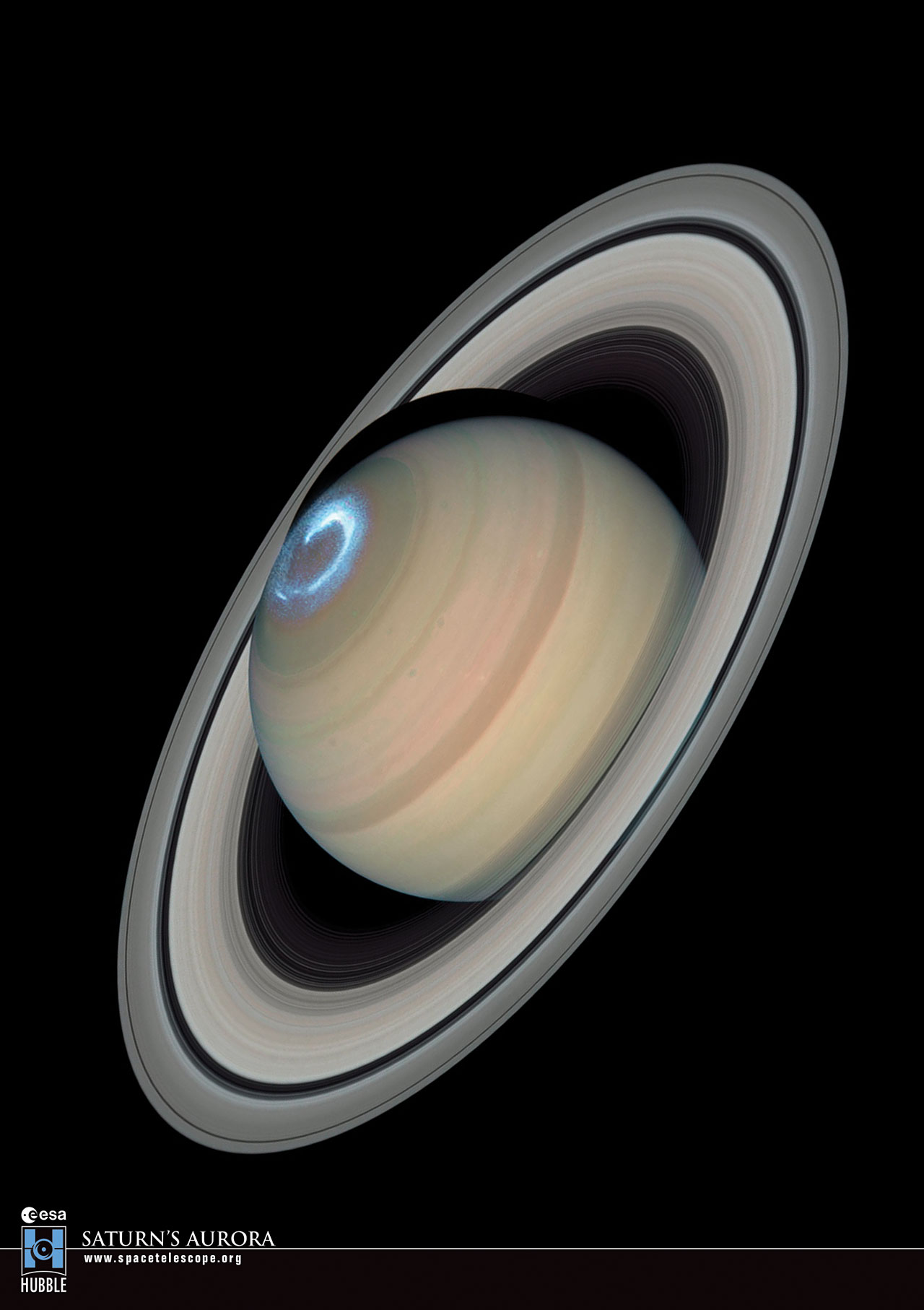
As I mentioned above, yes, all interactions will be relativistic and will be similar to cosmic ray bombardment onto the moon you live on. Things will get nasty and you'll be having geomagnetic storms all the time. Satellite communications will probably never work. Expect these particles to arrive in the previously mentioned bright region of the sky due to aberration still applying to this case. You will see similar aurora like regions on the parent planet (http://www.spacetelescope.org/static/archives/postcards/screen/hst_postcard_0008.jpg), and the star will probably not be affected that much.
Oh and by the way, due to the antimatter nature of your system and the matter nature of the ism, the atmosphere would thin over time, and later these antimatter cosmic rays will start bombarding the moon. So if you stay in the ism for long enough, living on the moon will be difficult. Also, I am assuming that life evolved on your moon in an antimatter ISM and you have entered the matter ism only recently, as otherwise, the moon won't be stable for long enough for life (intelligent life) to evolve.
I will try to see if I can think of some other effects, but for now, I guess this will do?!

No comments:
Post a Comment