Let's start with a quick clarification: Red Shift is different than red light.
Red light is just electromagnetic radiation with a 400–484 THz frequency range, the lowest that our eyes can see - highest being violet light, with a 668–789 THz frequency.
Red Shift is an effect that is observable when you analyze the spectroscopic signature of an electromagnetic radiation source that is so far removed from us that the expansion of the universe (whose unit of measurement is called the Hubble Constant) is noticeable because of the frequency drop, called Doppler effect.
In short, it works like this:
- Pick the elements that the universe is made of. That would be hydrogen (75%) and helium (24%), with 1% of trace amounts (everything else). For this example, let's stick with hydrogen.
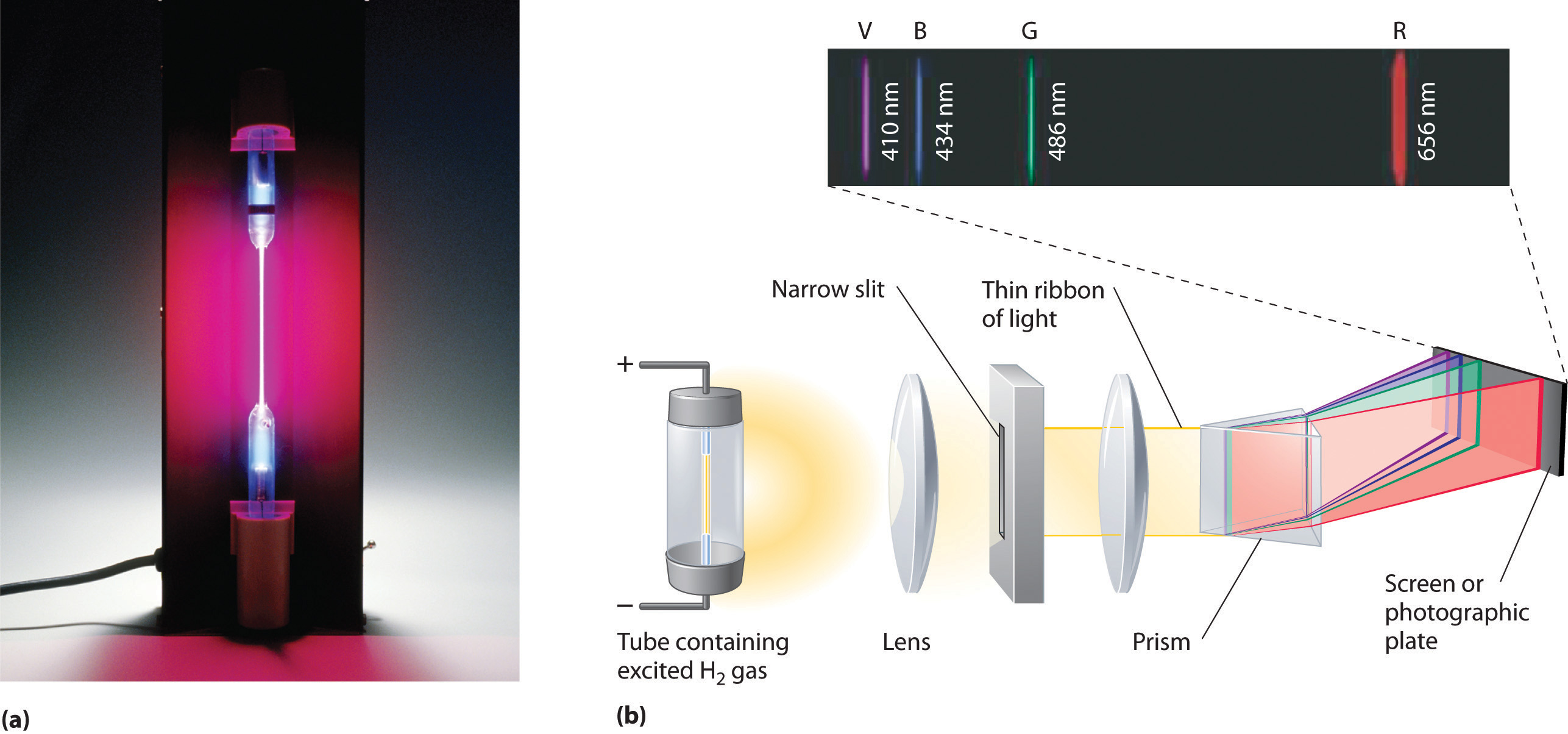
Extract hydrogen's spectroscopic signature:
Those markings are called narrow bands. Hydrogen narrowbands are well known : 656.2, 486.1, 434.0 and 410.1 nanometers.Now you look at the sky. Pick any bright dot, run its light through a prism, and knowing that it is also made of roughly 75% hydrogen and 24% helium compare its hydrogen spectroscopic signature to the bands you obtained earlier. Because of the Doppler effect caused by the expansion of the universe, the waves are stretched, making the frequency drop - shifting the whole spectroscopic signature towards lower frequencies. The further the object is, more noticeable is the shift towards red.

Thus, the term Red Shift.
Now, answering your question:
How do we know that its not just red light from red stars?
Because even regular light from red stars will shift towards the infrared side of the spectrum as a consequence of the Doppler effect.
Image Sources:
General Chemistry: Principles, Patterns, and Applications, v. 1.0
Starts With A Bang!

No comments:
Post a Comment